Friday, May 6, 2016

Emu Creek

Emu Creek (or Emu Creek Bush Band) was a band in Warrnambool formed by Peter and Sue Lucas in the early 1980s. In 1985 the Lucas's left to form "Eureka" and the Emu Creek name was carried on by Jon Clegg who gathered Heather Goddard, Dennis Taberner, Peter Lawlor and Michael Schack to continue the band. Lineup changes over the years led to the inclusion of Rohan Keert and Barry Williams.
Port Fairy on a New Year's Eve - Barry Williams, Jon Clegg, Rohan Keert, Heather Goddard, Michael Schack

On the back of a truck in Hamilton - Peter Lawlor, Michael Schack, Jon Clegg, Heather Goddard, Dennis Taberner

Port Fairy on a New Year's Eve - Barry Williams, Jon Clegg, Rohan Keert, Heather Goddard, Michael Schack

Posed photo: Back: Dennis Taberner, Michael Schack, middle: Heather Goddard, Jon Clegg, front: Barry Williams

Barry Williams, Jon Clegg, Rohan Keert, Heather Goddard, Michael Schack, on the Warrnambool Civic Green

Emu Creek 1985 version: From left, Peter Lawlor, Michael Schack, Jon Clegg, Heather Goddard and Dennis Taberner

In Liebig St Warrnambool around 1990 - From left, Peter Lawlor, Michael Schack, Jon Clegg, Heather Goddard and Dennis Taberner

Concrete offer baffles emus
(Melbourne Truth 20th Feb, 1988) - written by David Dawson. Reproduced with permission from the author. Copyright restrictions apply to further use.
The slab with no beer. Bush band Emu Creek got a shock when invited to perform at the opening of the Byaduk Bicentennial Slab. Byaduk, a tiny town (population about 50), between Hamilton and Macarthur, [which] was once voted Victoria's most boring town. "When we got the invite we thought Bob Hawke had discovered a discarded slab from his liquid days and donated it to Byaduk", bassist Mick Schack said. "But the township was given a bicentennial grant of $3000 and decided to erect a concrete slab instead of a barbacue area". The function raised an extra $2800 to decorate the slab. "At present the slab is used by children with remote control toys and skate boards" Schack said.

New breed of Emu
(Warrnambool Standard 6th June 1991)  - Copyright Warrnambool Standard 1991.
Warrnambool district band Emu Creek will revive the entertainment pulse of Port Fairy's Star of the West Hotel when it performs there tomorrow night. Emu Creek will be the first group to play at the hotel in a number of months and will provide a new line-up on the night. Guitarist Barry Williams joins the band as lead and Heather Goddard has moved to keyboards and accordion.

New dance craze to hit town
(Warrnambool Standard Dec. 2nd 1993 by Natalie Staaks) - Copyright Warrnambool Standard 1993.
Local band Emu Creek, renowned for its bush dance calling, is about to spearhead the entry into Warrnambool of a new dance craze. Popularly known as "boot scootin", the dance is essentially country line dancing with some added theatricality. It is not an entirely new phenomenon, though it gained a new audience through the hit record "Achey Breaky Heart" and the accompanying "Achey Breaky" dance. For Emu Creek, it is a logical extension to the increased country music emphasis in the band's repertoire, and to the attention paid to structured dancing in their performances. Those wishing to kick up a storm can expect expert tuition from dance caller Jon Clegg and partner Heather Goddard. Emu Creek can be caught "boot scootin" at the Caledonian Hotel on Fridays from December 3. 


Photo taken at Jim Bonnett's 70th birthday in Yarpturk 29th Nov. 1992

Bootscootin' at Killarney Hotel - early 1990s

1987


Monday, May 2, 2016

Photos from Koroit Irish Festival 2016


 Parade

Michael Schack


 Original Committee members

Rubber Band
 

Brett Holbrook, Lex Paton, Barry Lowther

Brett Holbrook, Rob Graff, Lex Paton

Jo Brooks

Dennis Taberner, Leamon Chambers


Terry Sim

 Michael Schack, Melissa Bowman, Trevor McKenzie

 Wednesday Whistlers

  Wednesday Whistlers

 Zeon

  Wednesday Whistlers
 Wednesday Whistlers

Koroit Irish Festival 2016

Koroit is ready to shine

THOSE heading to Koroit this weekend are in for an experience to remember.
The town will host one of the biggest events in its history with the staging of the 20th Koroit Irish Festival.
Beginning on Friday and continuing through Saturday and Sunday, the festival is a celebration of the towns rich Irish heritage.
Over the past two decades, the Koroit Irish Festival has attracted some of the best Irish genre performers in the country.
PARADE: The Koroit Street Procession is full of colour and music, with a presentation of the 32 Irish county flags. Picture: Angela Milne.
That will continue in 2016 with a high-quality line-up of talent to hit the stage.
The Borderers, Mike Brady, Maria Forde and Bhan Tre, all past headline acts, have been lured back for the milestone occasion.
Traditional Irish band Cill-Airne is also high on the bill and have also been honoured as the Artist of the Year.
This advertising feature is sponsored by the following businesses. Clink on the links to learn more:
The festival will also announce its 20 Greatest Irish Songs, an exercise sure to create plenty of interest.
The Australian Danny Boy Championships and the Beks-Bowman Emerging Talent Award will again be hotly contested.
And while music will again be a highlight, the Koroit Irish Festival has grown into so much more over the past two decades.
Spud picking and peeling, Irish pizza and soda bread making competitions, an art exhibition, market stalls, a kids area and the famous street procession will all take centre stage at some time on Saturday.
On Friday evening, the Koroit Theatre will be the venue for the opening night spectacular, featuring, music, trivia, comedy and even a hypnotist.
On Sunday, the festival will host a Gaelic Games Carnival with teams coming from Melbourne to take on the locals in women’s and men’s Gaelic football and Camogie (women’s hurling).
Koroit Irish Festival president Chris Evans said the variety of entertainment on offer at the festival is a major attraction.
“People can’t believe what a varied program of events we have over the weekend,” Mr Evans said.
“There is so much to do, no matter what interests you we are confident that there is something at the festival that will appeal. We want people to come out to Koroit and have a great time. It’s a great community event and our main aim is to have a fun weekend and show off what a great little town we have.”
 

Saturday, April 9, 2016

Koroit singer-songwriter Kayla Dwyer wins music award

Koroit singer-songwriter Kayla Dwyer wins music award


Warrnambool Standard April 2nd 2016

Local musician Kayla Dwyer’s attendance at the National Folk Festival in Canberra last weekend took an unexpected twist when she ended up winning a music award.
Ms Dwyer went along to help folk musician Peter Daffy with his sound engineering, but won the Lis Johnston Memorial Award for Vocal Excellence after filling in a spot at the last minute.
“This is very special to me,’ Ms Dwyer said.
“I’m a bit shocked, really, to say the least.”
The award was created in honour of Victorian folk singer Lis Johnston, who passed away 22 years ago.
Musician Kayla Dwyer won the Lis Johnston Memorial Award for Vocal Excellence after filling in a spot at the last minute.
Ms Dwyer was presented with the award on closing night and performed her song The Fireman to a large audience.
 

Barry Peters


Barry Peters looks back on 20 years as a children's entertainer


Barry Peters has followed a unique musical path over the past 20 years. Picture: Amy Paton
To have ended up in such a specialised musical niche seems like it could have only happened by choice, but Peters said he “never ever contemplated being a musician or making a career in music”.
“I didn’t choose to do what I do - it chose me,” he said. 
“I just said ‘yes’. I had never thought about creating music for children or entertaining children. It was totally off my radar.”
Barry Peters and a stage full of helpers.

The reason for all this is Peters is a children’s entertainer who specialises in environmentally themed music. He predominantly works in preschools, playing between 170 and 200 gigs per year across Victoria, NSW and South Australia.
Although he had a few childhood guitar lessons and learnt to play Beatles songs as a teenager, it wasn’t until he took a job as an inner city youth worker in Melbourne in his 20s that he started to understand what music could do.
“I just started playing with people at a street level,” Peters said.
“It was about connection, about being present with people, and music (did that). I really enjoyed it. You would meet astonishing musicians I could barely keep up with.’
Peters helped run emergency accommodation for the homeless and the mentally unwell. People would drift through and Peters would use music as a way to break the ice or win their trust. They would sing together or he would give them guitar lessons.
“There was a young kid who was staying with me in Kensington and he’d been on the streets since he was 12,” he said.
“His dad was in jail, his mum was schizophrenic, and he was a kleptomaniac. Basically he would steal stuff –that was how he lived. He was 14. I had two guitars - one was a good one and one was a not-so-good one and he stole the cheap one. He was always playing the good one and he was quite talented. So he pawned my cheap one.
“After agonising about it for a few days I decided to give him my good guitar. I basically said to him ‘I’m giving you this so you don’t have to steal it’. 
“About three years later I got a letter from him saying he’d been accepted into the pre-program for the conservatorium for music. And I got a Facebook message off him about 18 months ago inviting me to stay with him down in Melbourne. He’s now got a young family (and) he makes music with his family every day. He gave me a plaque thanking me for the guitar when I saw him 18 months ago. That was pretty special.”
Such a story goes a long way towards explaining Peters’ musical path. He said he never desired to start a band or be up on stage. Music was merely a way to communicate, to share stories, to bring people together and to create a sense of community. Peters liked the idea of sitting around a loungeroom singing with friends far more than standing in the spotlight.
Barry Peters and friends.
In 1992, Peters and his growing family came to Warrnambool, with his early musical experiences in the town involving playing guitar sporadically as part of his role as a social worker, similar to what he had done in Melbourne, Portland and Ballarat previously. 
Three years later, his playing caught the attention of Dennington kindergarten teacher Robyn Bishop, who taught at the preschool where Peters’ eldest child Madeleine went. Peters said his career as a children’s entertainer “basically began” with a simple request from Bishop to come and play music at the kindergarten.
“I learnt up a bunch of Play School songs and the night before Madeleine and I wrote a song together,” he said.
“I just said ‘we should write a song if we’re going to sing tomorrow’, so we wrote this little ditty (called The Lolly Song). I said to her ‘what do you want to write a song about?’ and she said ‘lollies’.”
The experience of writing music with Madeleine and playing at the kindergarten was life-changing. 
“I loved doing it,” he said.
“A couple of months later I wrote a couple more songs, including one called Puffing Billy which is still the most popular song I do.
“I went back a few months later and I’d written Puffing Billy (by that stage) but we’d also written a farewell song for Robyn because she was leaving the preschool. And I still remember being in the room with the children and parents singing Robyn’s farewell song and halfway through the song I was looking around the room and literally everyone in the room was crying. Kids were crying, parents were crying, staff were crying because Robyn was very loved. What struck me about it was how powerful music was. I hadn’t had that experience until that moment and I was just addicted.”
Peters quickly worked up a body of songs and started performing at local preschools and festivals. Soon after, he convinced Warrnambool musician Don Stewart to join him in the endeavour, which was named Canya Dantz at that stage. Peters said Stewart was “the backbone of the music” and still is, serving as producer on almost every recording Peters has made.
Stewart eventually left the performance side of things to Peters, preferring to focus his musical attention on his own projects such as Dalriada and Aniar, but his efforts in the studio helped create the Canya Dantz album that came out in 1997. The release confirmed to Peters that he was on the right track.
“It was intimidating and exciting,” Peters said of making the album.
“What solidified things for me over the next 12 months was the feedback we got from that first album from parents. It wasn’t little things like ‘the kids like your album’. Andrew Hallett, who plays bass with me still, he pulled me aside one day and said ‘you realise our kids haven’t let us take your CD off for about nine months. It’s the only CD they let us have in the CD player’. It’s sort of like the kids voted.”
Barry performing under the name Canya Dantz in the early days of his career.
Peters considered ditching his day job to focus on being a children’s performer full time, but first he sought out the advice of others in the field. He contacted the likes of Peter Combe, Franciscus Henri, and Monica Trapaga, who Peters said he was “inspired and cautioned by”.
“I admired them but learnt from them as well in terms of their careers and things they’d done and not done and what I felt would work,” he said.
“(Peter Combe) is back in business now but at that time he was bitter and twisted and angry and not working in that area at all, but had a whole lot of baggage. That was actually the thing that struck me most (about talking to children’s entertainers) – (a lot of these) people were full of demons. They were trying to process these things that hadn’t quite worked for them. I thought ‘gee you’ve got to do a lot of emotional work to stay ahead of that’.”
As his profile grew and Peters found himself performing further away from Warrnambool, he was approached about taking the next step up the ladder of kids entertainment.
“Twice in those early years I had promoters wanting to take me up and down the east coast,” he said.
But Peters and his wife Rachel had three children of their own, including Lachlan, who was diagnosed with autism, and Peters decided he couldn’t afford to be touring all the time making other people’s children happy.
“I went very close to going on the road but they wanted four or five months at a time to do the TV level and theatre stuff and I just couldn’t do that,” he said.


Instead Peters began creating his own preschool and primary school tours across Victoria, which meant he was never away for more than five days at a time. 
“Very quickly I realised that education side of things was an income and it was during daylight hours,” he said.
“That was over the first six years and that just grew as a business. So that became an income.”
Peters said that for a long time he still thought playing in preschools was “a stepping stone to something else” but eventually realised he was doing what he loved.
“I don’t know what stage in the journey (it was) - probably 10 years in - but I started to think ‘I actually like preschool shows better than any other show I do’,” he said.
“There’s just something magic about the context of a preschool. They’re little arts precincts. Not only that, but you get the audience’s (attention) for an hour. When you do a public event … unless you swallow fire in the first 30 seconds the kids go off to the woodwork room.”
The number of gigs per year started growing to more than 100 and the road trips got longer. His three kids, who would often appear on stage with him at public events, got older and Peters admitted he had to start gleaning song ideas from friends’ children to keep the inspiration flowing.
In 2001, he released a second album (Dantzing Round The Bus Stop) and the following year he released the first of his two DVDs, inspired by Lachlan, and Peters’ newfound understanding of how autistic children approach the world.

Lachlan on stage during one of his Dad's shows.
“I learnt how important it is to make music visual because I recognised in my son a whole (group) of human beings that see things through a physical maze first before they hear the words or the music,” Peters explained.
“So particularly in preschools when I’m preparing shows I work really hard on the visual presentation of each piece. 
“One of the local shows I do every year is at the Special Development School. The first year I played at the SDS the autistic boys … sat in the back rocking and screaming or ran out the door and didn’t participate in the show. It was the year I released my first DVD and (the school) bought a DVD from me. The next time I turned up at the SDS to perform, those autistic boys were in the front row ready for the show and loved it and stayed there for the entire thing. And the teacher simply said to me afterwards ‘they’ve been watching the DVD’. And so it made me realise ... that once they were able to see it visually they knew what was coming and they weren’t scared of it.”
Another DVD was released in 2006, followed by another album (Come Over & See Me Sometime) in 2007.
In 2008, Peters attempted a rare foray into the world of making music for grown-ups with a project called Gaberdine. While some of his kids music certainly don’t sound like you would imagine kids music to sound – tracks like That Little Light has a psychedelic or prog rock edge to it, while the title track of his new album When We Walked With Butterflies is a beautiful piano ballad – Gaberdine was his first attempt at deliberately targeting a more mature audience.“I’d always written poetry and so I found myself writing songs for adults as well,” he said of the project’s genesis.
“I started putting together a project where I was hoping to be able to perform to adult audiences. It was also linked with the fact that I applied to every folk festival or music festival in the country and apart from a couple of local ones I hadn’t been booked by any as a children’s entertainer. So I thought if I had a kids show and an adult show, the doors might open a bit better. So I put a lot of work into producing the Gaberdine album. When it was released, I sent it off to festivals with my kids stuff and immediately got booked by a bunch of festivals for my kids act and no one booked Gaberdine!”
The band he assembled for the album (titled The Flight Of Birds) and resulting live shows soon dissolved. While Peters admitted it was a bit of failure in one sense, it did inadvertently kick off a renewed interest among the festival circuit in his kids’ work.
Over his two decades as a children’s entertainer, Peters’ output has becoming increasingly environmental, to the point now where he says his songs and shows are “100 per cent” about the environment and getting children to be aware of the world around them and their place in it.
This has manifested in a compilation of environment songs in 2009 (If You Live On My Island, which featured the locally inspired track They Call Me Maremma), as well as a mini-musical called The Story Of Tower Hill, which he revived at this year’s Port Fairy Folk Festival.
There was also The Story Of Buninyong, a four-month-long project Peters undertook with the children, teachers and local indigenous elders of Buninyong, which culminated in a huge community performance. The project won a Premier’s Education Excellence Award. More recently, he completed the Lake Songs album, co-written in 10 days with 10 schools in East Gippsland and produced in collaboration with the Gippsland Plains Conservation Management Network.
Next year will mark the 20th anniversary of his first album, although he’s presently more focused on the release of his new one When We Walked With Butterflies, which was partly produced by his son Didi.
Despite the awards and album sales, Peters still doesn’t consider himself “to be much of a musician”. But that doesn’t matter to Peters – he’s more intent on making children love where they live and to become aware of the world around them. 
“My passion is about ... trying to connect children to reality,” he said.
“I love the work. I came home from the first week of touring this year and it was just so nice. I just laugh with children. 
“What I do before every show (is) I say to myself ‘this is as good as life gets’. So when I’m with the children and I’m performing I’m not trying to be somewhere else. There’s no stepping stone, there’s no ladder. I’m simply saying playing with these children now for the next hour is as good as my life will ever get. So let’s be in that moment.
 Warrnambool Standard 9th April 2016


Thursday, April 7, 2016

Veterans team up

Veterans team up - published in the Warrnambool Standard July 22nd 1999

Two veteran south-west musicians will share the stage for the first time in more than twenty years when Warrnambool band Old Spice plays the Caledonian Hotel in Port Fairy on Saturday night. Drummer Eion Cameron has been enticed out of semi-retirement to join current Old Spice members Tim Netherway, Michael Schack and Garry McColl for the gig. Cameron, now a Port Fairy resident, was a founding member of the 1970s band "Mod Squad", which also featured Netherway on guitar. Added highlights are expected to be guest appearances by Eion's son Heath Cameron (current drummer with Port Fairy band Hiway), and some mystery vocalists.

Eoin Cameron

Hannah Schack and Michael Schack
Heath Cameron, Hannah Schack, Michael Schack

Heath Cameron

Eoin Cameron, Michael Schack

Michael Schack, Garry McColl

Eoin Cameron, Michael Schack

Tim Netherway, Garry McColl

Old Spice at the Stump - 24th July 1999
The Stump Port Fairy hosted band Old Spice  with  a few guests on a mild July night.
The evening opened with Garry McColl's rendition of the 1970s Dingoes song "Way out west" before Tim Netherway moved into the Rodney Crowell song "Shame on the moon" as the crowd warmed up. Michael Schack took the vocals on the third song, the Amazing Rhythm Aces  "Settin' you free", a swing based tune that usually has a toe tapping effect. Eion Cameron's drumming, despite an extended period of dormancy, showed no signs of deterioration as the Elvis hits "All Shook Up" and "That's All Right Mama" moved the feel along. As reported in newspapers in the preceding week, Netherway and Cameron were sharing the stage for the first time since their "Mod Squad" days in the 1970s.
The first bracket was punctuated by a couple of guest appearances. Hannah Schack took the microphone for golden oldies "Stand by me" and "Do you want to dance?" as well as Shania Twain's "Your'e still the one". Heath Cameron replaced his father on the drummer's stool for the latter two songs and kept the beat going for a further couple of tunes including "Chained to the wheel" by the Black Sorrows (during which Tim did his Vika and Linda imitation).
The second bracket was introduced by birthday greetings to "Meggsy" (turning 60). By now the crowd's alcohol consumption was such that no vocal handicap prevented them joining in popular tunes such as "Lay down sally" and "Eagle rock", and Hannah Schack and Erin Finnigan provided back up vocals on "Mustang Sally". The third and final bracket provided extra surprises as Tony Beks joined the band on fiddle and mandolin and Dennington school teacher Colleen Watt sang a superb version of the blues classic "Crossroads". The night culminated with an encore performance of "Ghost riders in the sky" as a lone male patron mounted the pool table to attempt a "Fully Monty" exhibition before being dragged back to earth by management.


Monday, March 28, 2016

The Dead Livers' Michael Schack talks about his life in music


The Dead Livers' Michael Schack talks about his life in music

By MATT NEAL - Published in the Warrnambool Standard.
March 26, 2016 - click this link for the original article


Four weeks on from a liver transplant, Yarpturk musician Michael Schack is on the road to recovery.


MICHAEL Schack is not a man prone to regrets, but there’s nothing quite like cancer to make a person stop and take stock of their life.

In August last year, the Yarpturk musician was diagnosed with liver cancer but is on the mend after a transplant in February – he’s quick to point out he’s the second member of revered country band The Dead Livers to have undergone the procedure.

While he has played in many groups over the years, Schack has been part of The Dead Livers on and off for almost 40 years. It is the band he is most deeply connected to – it earnt him a Golden Guitar nomination, took him around Australia, and is perhaps the musical project he is most proud of.

But it is also the source of some regret. The Dead Livers is a great example of that oft-told rock ‘n’ roll story of a band that “almost made it”.

“Yes, there was a sense of regret; that we’d cheated ourselves to some degree in not realising our full potential,” Schack said recently.

“I don’t know if we were anything spectacular musically but there was just a certain mixture of things with the original songs and the presentation of them that did appeal to people and it could have gone further I think if we’d wanted to apply ourselves better.

“But we were having a good time doing what we were doing, and like everything else you take it for granted a little bit at the time. You don’t think it’s going to end. It’s only later you can reflect on what could have been.”

The Dead Livers in 1999 - (back from left) Michael Schack, Marty Atchison, Rodger Delfos, and John Berto. (front from left) Brendan Mitchell and Richard O'Keefe.

The Dead Livers story probably goes back to a Hamilton band called The Dogs, which was the high school outfit that saw Schack team up with future Livers singer Marty Atchison for the first time. It was 1965 and they were “just playing hits of the day - Rolling Stones, The Kinks, Beatles, that sort of stuff”, Schack said, but it started a musical connection with Atchison that has endured for 50 years.

Atchison said it was Schack’s dad Jimmy that encouraged them to pursue music after they finished high school.

“He was pretty integral,” Atchison said.

“We were 18 and out of school (and) Jimmy was getting us gigs at the Willaura Hotel and Mac’s Hotel in Glenthompson … and wool shed gigs. He’d probably drive us there and we’d have a few beers and be pissed after the third pot.

“By then we both worked in Melbourne and we’d come up to Glenthompson on the weekends to do whatever gigs were around.”

It was about 10 years after leaving high school that The Dead Livers started to take shape, Schack said.

“I had a job at Telecom (and) I met a lot of musicians at that job,” Schack said.

“It seemed to be the sort of place where people didn’t have to work too hard, where people had other interests outside of work. I worked in the office with John Berto who became the guitarist in The Dead Livers and (guitarist) Rodger Delfos who was also a member of The Dead Livers.”


The Dead Livers in 1978 - (from left) Michael Schack, Marty Atchison, Richard O'Keefe, Brendan Mitchell and Edward Mitchell.

The Dead Livers formed in 1978. Atchison, Schack and drummer Richard O’Keefe would prove to be the core of the band, while Berto and Delfos were among the many musicians that joined the oft-changing line-up later.

The band joined a growing country music scene in Melbourne that was new and fresh, and somewhat removed from the traditional country and western music that appealed to a typically older audience.

“We copied a couple of other bands we’d seen,” Schack said.

“One was called Saltbush, one was called Hit & Run and they were bands that played at inner suburban pubs but played (original) country music. They were reaching a new audience of younger, hipper type people I suppose, rather than traditional country fans.

“(Those two bands) were incorporating original songs with an American style rather than that Aussie bush ballad style. (It was) Australian lyrics with redneck rock style.”

The Dead Livers quickly found fans, fitting into the country scene revolving around the Polaris Inn and Stockade Hotel in Carlton, and the Station Hotel in Prahran. They made it through to the finals of radio station 3UZ's country music battle of the bands, which helped spread their name in 1978.

Among those early fans was David Dawson, a journalist from Warrnambool, who was working in Melbourne and took a shine to The Dead Livers and their original songs.

Atchison called Dawson the band’s “self-appointed publicist”, and Schack said Dawson had a big influence on the band.

Michael Schack in 1994 with Garth Brooks and Dave Dawson.

“I guess it was a media manufacture to some degree,” Schack said of The Dead Liver’s growing profile.

“Journalist Dave Dawson ... chose to start writing about us as having a sort of outlaw image. We didn’t really plan to present ourselves that way but once it started happening we were generally recognised as an outlaw country band. It was something that was out in America at that time - Waylon Jennings and Willie Nelson had done the Wanted! The Outlaws album in the mid-’70s, that’s where the whole subgenre came from, but there wasn’t really that many (bands) in Australia portrayed that way.

“I suppose we did have some characteristics that were outlawish in terms of country music norms, like we wouldn’t traditionally dress up in matching suits or cowboy hats, although some of us might wear (cowboy hats). We did get criticised in the battle of the bands competition for not doing that ... of being outside the ‘law’ of country music.”

Part of the outlaw label probably connected to the audience and the band’s love of a drink, he said.

“We played a thing one night for PBS FM at the Prince of Wales Hotel in St Kilda and the publican said he liked us there because we only attracted half as many people as the jazz night but they drank twice as much beer,” Schack said.

Atchison said “every night was a party” as the band started racking up residencies. Every Friday night, the band played The Espy in St Kilda. Saturday nights were at The Renown in Fitzroy. Over the next couple of years they would also score long-running residencies at the Aberdeen Hotel in North Fitzroy, the Rising Sun Hotel in Richmond, and the Sydenham Hotel in Richmond.

Between 1979 and 1984, The Dead Livers went from strength to strength. They filled rooms in Melbourne, they supported American acts Leon Russell, The Amazing Rhythm Aces and Charley Pride, and they were a hit at Tamworth, where Schack’s song Star Of The West saw them nominated in the best group category of the Country Music Awards aka the Golden Guitars.


They played to upwards of 20,000 people at country music festivals, were offered a recording contract (which the band turned down over publishing/copyright issues), performed on TV, played interstate, and released a couple of singles that scored radio airplay.
Marty Atchison, Michael Schack and Rodger Delfos performing in Tamworth in 1982.

They also caused a minor scandal and won the heart of country music legend Willie Nelson.

“Dave Dawson wrote this song I’d Love To Have A Joint With Willie - a parody of Slim Dusty’s (I’d Love To Have A Beer With) Duncan, which was out at the time - then Willie Nelson was coming out to Australia,” Schack said.

"So (Dave) got us to record (it) on a little cassette EP and Peter Bain-Hogg, who is now a Rockwiz producer, sold it out of the boot of his car at the Willie Nelson concert and they played it over the PA prior to Willie Nelson’s performance.

“We got a lot of publicity. It was a song that was supposedly controversial. I think the headlines that were in The Truth were ‘Willie Drug Song Outcry’ and I think someone on 3DB got banned for playing it. Some of this was sort of manufactured. There was an element of truth in it but (it was manufactured outrage).”

An excerpt from The Truth.

According to The Truth – a paper renowned for being scandalous – Nelson had endorsed the song and played it over the PA before each of his Australasian concerts.

But in 1984, Schack took a job in Warrnambool and quit the band. Atchison had already left the previous year and the band had even broken up briefly in 1983, only to reform some months later.

“In retrospect I probably could have maintained a presence in (the band when I moved to Warrnambool),” Schack said.

“I wasn’t used to travelling down to Melbourne that far at the time but now I do it a lot so it would have been possible.”

The Dead Livers almost called it quits again, but returned with a new line-up. The momentum slowed, but eventually Atchison, Schack and O’Keefe reunited and the band settled into a more sedate routine, gigging a couple of times a year. The halcyon days were over.


In 2000, they finally recorded an album Reaching To The Western Sky to go with their previous compilation Greatest Misses.


In the meantime, Schack had made himself home in south-west Victoria.

“I was surprised to find a very vibrant music scene in Warrnambool,” he said.

“I spent about a year not doing anything much (except) a couple of fill-in things, then I was offered the opportunity to join the Emu Creek Bush Band around mid-’85. It was Australian bush music - we used to do bush dances. They were popular at the time, we’d do one a week at least somewhere.”


Emu Creek (formerly the Emu Creek Bush Band) in 1993 - (back from left) Jon Clegg, Heather Goddard, Barry Williams, Michael Schack and (front) Rohan Keert.

Over his three-plus decades in the south-west he’s been a part of bluegrass trio The Ryegrass Staggers, cover bands such as Old Spice and Louie & The Rustlers, country stalwarts Lost In Suburbia, folk-country trio Rusty Bucks, and even a short-lived cover act with his daughters Hannah and Rebecca called Behind The Mike.


Behind The Mike (from left) Hannah, Michael and Rebecca Schack busking at the Folkie in 1995.

While his recent battle with cancer saw him reflecting on what had come before, Schack looks forward to a continuing future in music. He’s keen to add banjo to his repertoire of instruments (which already includes, guitar, bass and dobro), he’s pursuing an interest in Irish music, and is not adverse to the idea of doing something with the stash of original songs he’s written over the years.

“I’m still experimenting with different instruments (and) I still write songs – they just never go anywhere really,” he said.

“The market for original music in Warrnambool is limited, as you would know. So it’s just something that’s become a secondary thing.

“I’m not a lead singer. I do sing a little bit but the songs (of mine) that have been recorded, Marty’s sung them – he’s a much better singer than me, but it’s always difficult persuading someone to sing a song you’ve written. It’s much easier if you’re a good singer and you can just sing it yourself which I’m not quite game to record.

“I’ve certainly thought about (my music lately and) wished I’d done this or that. I’d wish I’d stuck with my guitar lessons at school longer than I did. But I’ve been grateful for the opportunities that I had given my capabilities. I’ve had my fair share of things to be thankful for. I don’t harbour too many regrets about not doing things.

Michael Schack is looking forward to getting back into music after his liver transplant.

“Perhaps I wish I’d applied myself to music more in those immediate post-school years. Perhaps focused a little less on drinking and a little more on music, even when playing music. I did give up drinking in 1989. I’d had a couple of drink-driving offences. I just found I couldn’t do both - drive and drink. One had to go.”

Through it all has been his wife Helen. They married in 1982 on a Saturday in Parkville – something that forced The Dead Livers to change their “regular Saturday gig to a Friday the night before it so we could still have a gig for the week as well as the wedding”, Schack laughed.
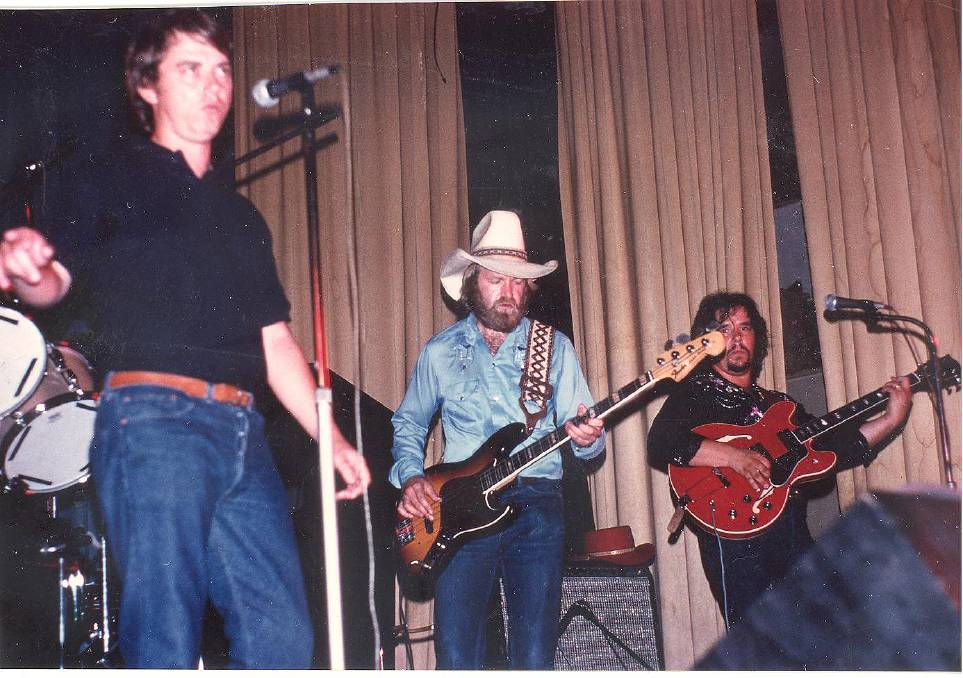
But the other constant in his life is music – Atchison called music “the big mover” in Schack’s life.

When Schack’s not playing, the Yarpturk musician maintains a blog (swmusicarchive.blogspot.com.au) that continues his former work at South West TAFE as a compiler of the modern musical history of the south-west. He also regularly appears on Jeremy Lee’s breakfast show on ABC Radio Warrnambool, highlighting the many talented artists and great songs to have emerged from the south-west.

While he’s not one to blow his own trumpet, he would be a more than worthy subject for his own radio segment.